[gtranslate]

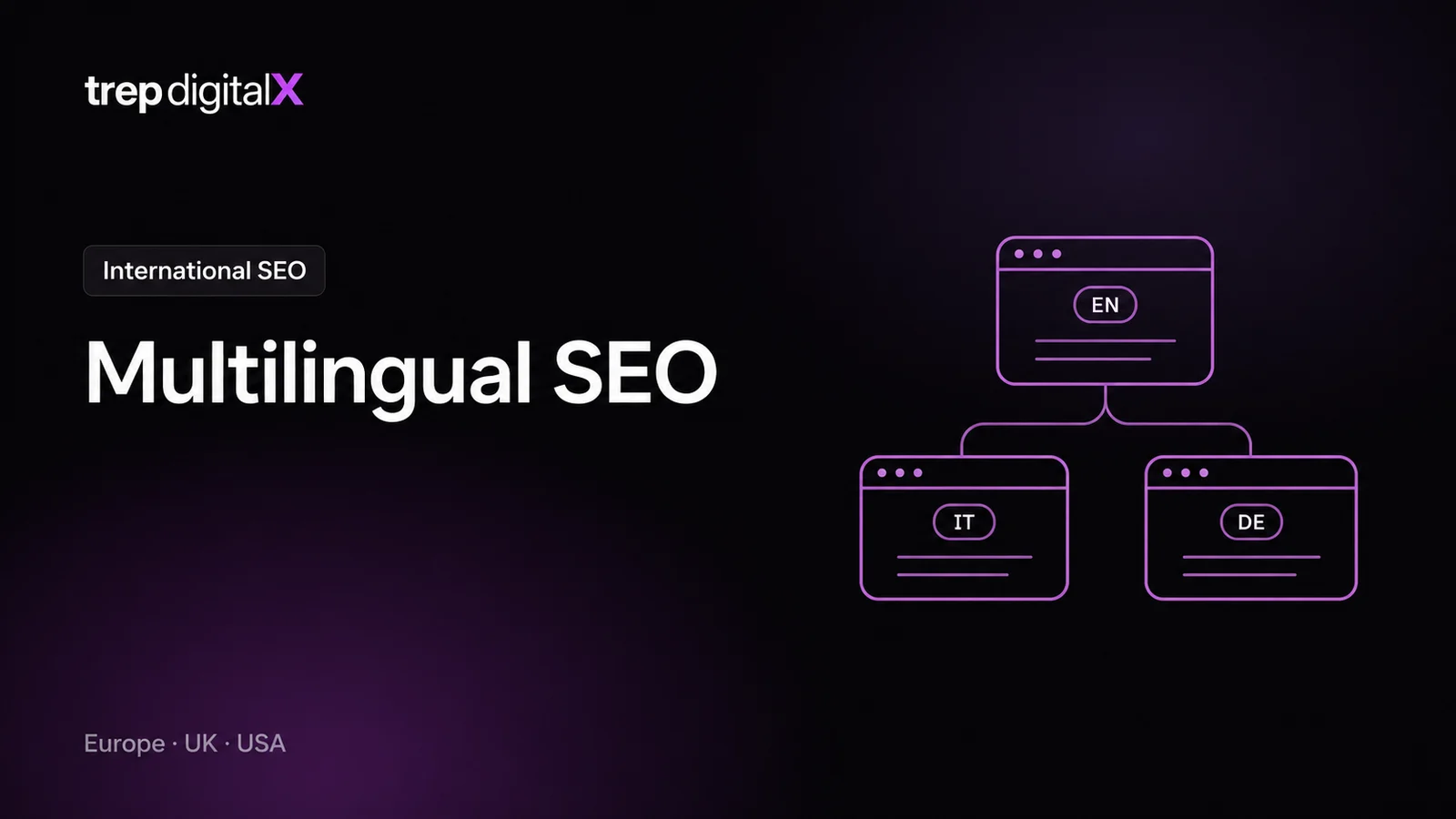
Multilingual SEO is not a translation project. It is the process of designing website structure, content, technical signals and measurement for people who search differently across languages and markets.
When multilingual SEO creates commercial value
It is useful when a company can genuinely serve more than one market, has a clear offer for each audience and can manage enquiries in the target language. It is not useful to publish dozens of translated pages without a sales process, local proof or a plan to maintain them.
Europe, the UK and the USA are not one search market
The same English page may be understood in every market, but terminology, commercial expectations, regulations, pricing language and conversion patterns can differ. Research should therefore compare search demand and decision criteria by market before deciding whether one English experience is enough.
The technical foundation
- Use stable, crawlable URLs for every language version.
- Connect equivalents with correct hreflang annotations.
- Keep canonical tags self-referencing unless there is a real duplicate.
- Use a visible language selector that works on desktop and mobile.
- Include translated pages in XML sitemaps and monitor them separately.
- Do not redirect users automatically based only on IP or browser language.
Translate intent, not just words
A good workflow starts with the business objective and the questions asked in each market. Titles, headings, examples, calls to action and internal links should then be adapted to those decisions. Machine translation can accelerate a first draft, but subject and market review remain essential.
A practical launch sequence
- Choose priority markets and validate the offer.
- Map services, proof and questions for each audience.
- Design URL structure and language relationships.
- Localise core pages before expanding the blog.
- Implement hreflang, metadata, schema and sitemaps.
- Build relevant local references and links.
- Measure visibility, leads and assisted conversions by market.
Trep DigitalX is based in Bergamo, near Milan, and supports companies across Italy and international markets with multilingual website design and international SEO, AEO and GEO.
Frequently asked questions
Do we need a separate domain for every country?
Not necessarily. Subdirectories often provide a simpler and stronger structure, but the right choice depends on markets, teams and existing authority.
Can AI translate the whole website?
AI can accelerate drafting, but human review is still needed for accuracy, brand voice, local terminology and conversion copy.
Articoli in evidenza
Parliamone
Vuoi applicarlo alla tua azienda?
Raccontaci mercato e obiettivi. Guardiamo insieme il tuo sito e ti diciamo da dove conviene partire.