[gtranslate]

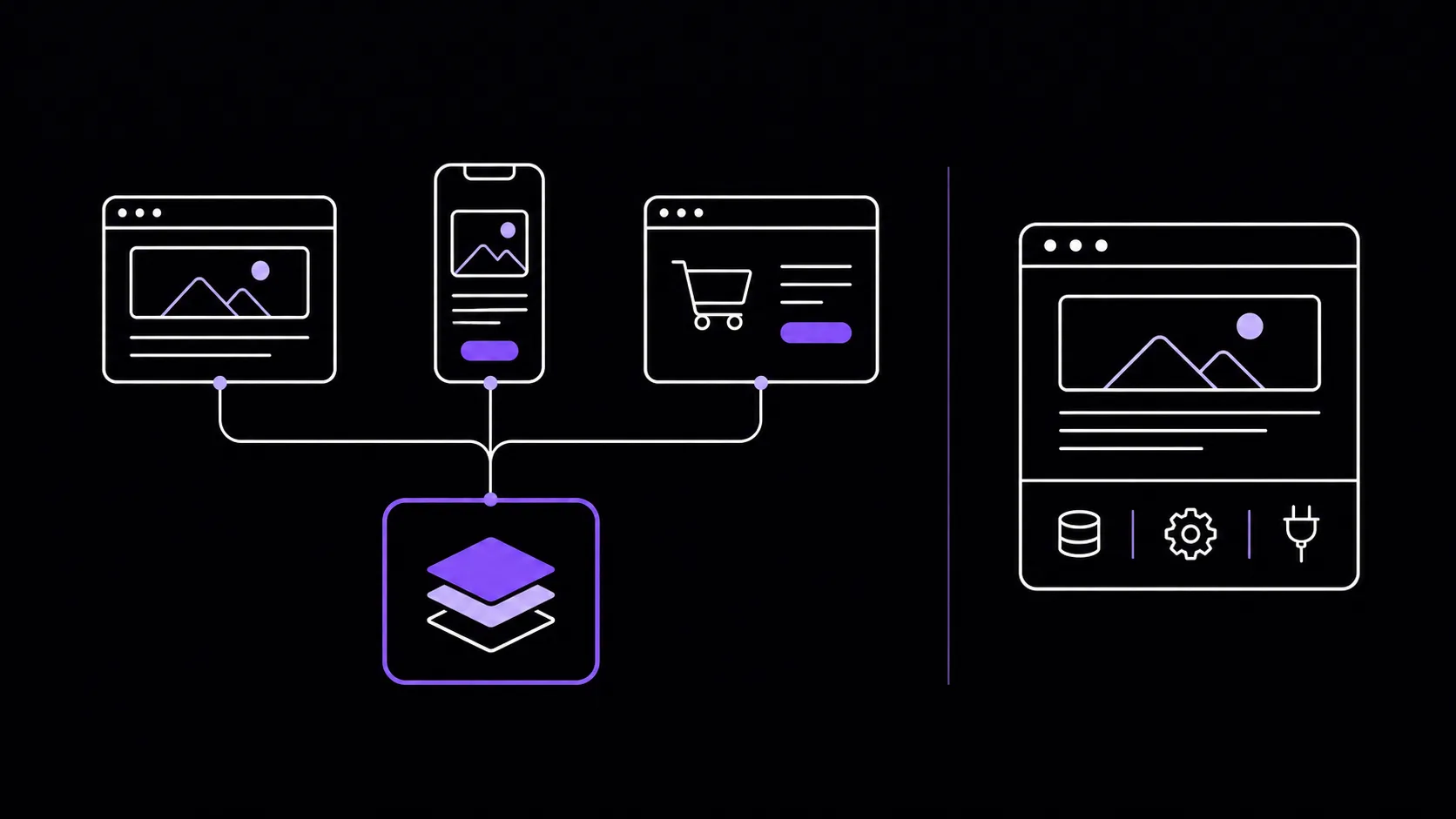
Traditional WordPress is the most efficient choice for many company websites. Headless architecture becomes valuable when content, channels and applications require greater separation and scalability.
What headless means
In a headless system, the CMS manages content and data while the frontend is a separate application, often built with Next.js, React, Nuxt or similar technologies. APIs distribute content to a website, mobile app, ecommerce platform, display or other channels.
How traditional WordPress works
WordPress manages content, templates and rendering in one environment. This reduces complexity, makes previewing straightforward and gives marketing teams familiar publishing tools.
Comparison
| Criterion | Headless | Traditional WordPress |
|---|---|---|
| Architecture | Separate frontend and CMS | Integrated system |
| Channels | Strong for multiple touchpoints | Primarily web |
| Editing | Needs designed workflows | Simpler for editors |
| Performance | High with correct development | Excellent with a disciplined theme and cache |
| Cost | Higher | Lower |
| Maintenance | More environments and dependencies | Simpler stack |
Choose headless when
- the same content powers websites, apps and other channels;
- frontend and backend teams work independently;
- advanced application experiences are required;
- ecommerce and product data come from multiple systems;
- the project has international scale and distribution needs.
Choose traditional WordPress when
- the project is corporate, editorial or lead generation;
- the marketing team needs strong autonomy;
- budget and timelines are controlled;
- integrations are limited;
- simple preview and publishing are important.
Is headless better for SEO?
Not automatically. A modern frontend can be extremely fast, but it must correctly manage rendering, metadata, canonicals, sitemaps, hreflang, structured data and redirects. Poor JavaScript architecture can make a website harder to index.
The hidden cost
Beyond initial development, headless requires separate hosting, deployment pipelines, preview systems, API monitoring and expertise across several technologies. Compare total cost, not only frontend speed.
Trep DigitalX delivers WordPress websites, custom architectures and multilingual platforms for companies across Europe, the UK and the US.
FAQ
Can WordPress be used as a headless CMS?
Yes, through REST API or GraphQL while retaining WordPress as the editorial environment.
Is headless always faster?
No. Performance depends on the frontend, APIs, hosting, images and caching strategy.
Is headless suitable for a small company?
Only when real complexity justifies the additional cost and maintenance.
Articoli in evidenza
Parliamone
Vuoi applicarlo alla tua azienda?
Raccontaci mercato e obiettivi. Guardiamo insieme il tuo sito e ti diciamo da dove conviene partire.