[gtranslate]

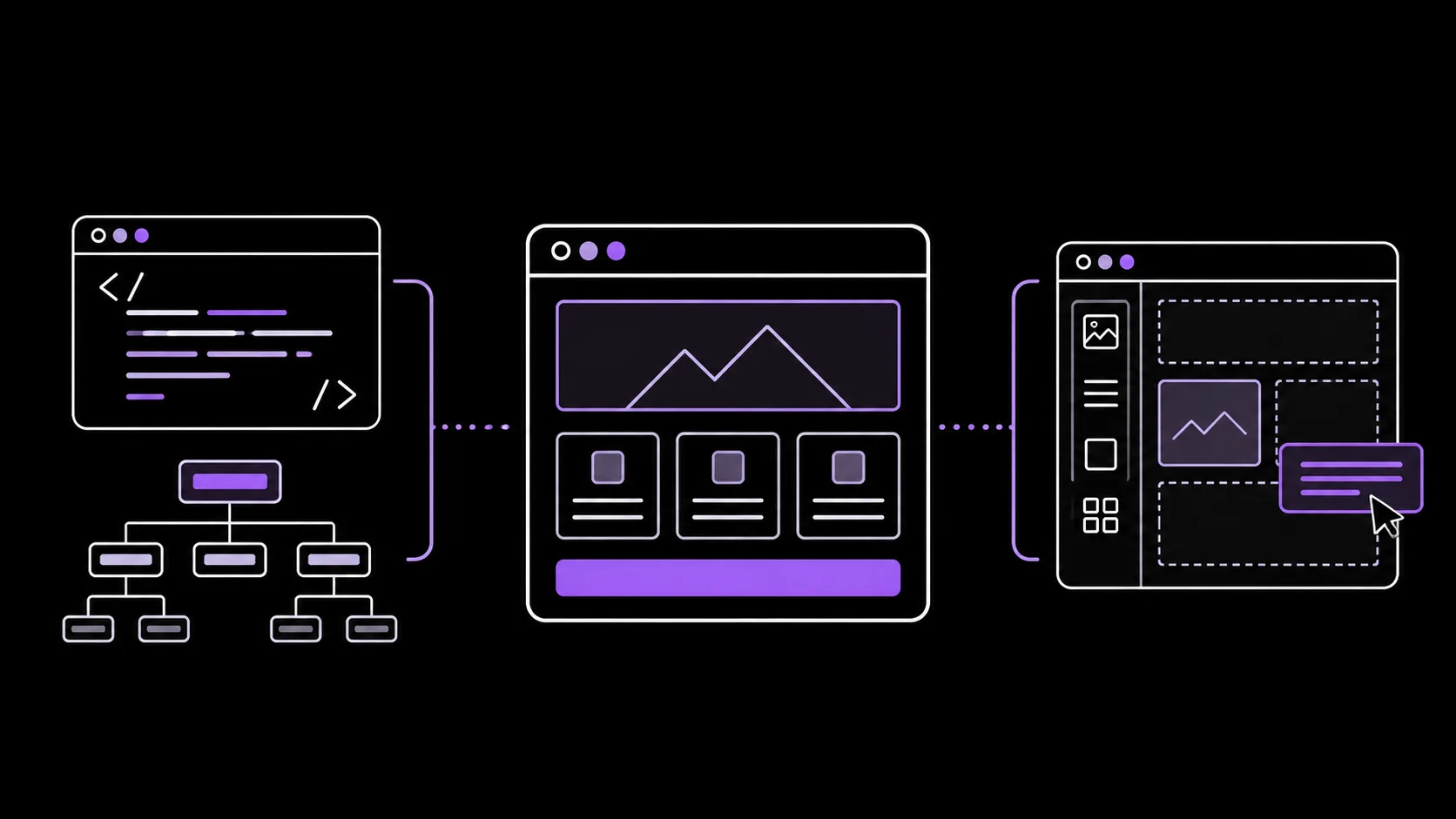
There is no universal winner: a custom-coded website provides greater control and freedom, while a page builder reduces delivery time and makes editorial management easier. The right decision depends on commercial goals, budget, expected lifespan and complexity.
What custom development means
A custom website is designed around the company’s requirements. Components, interactions, integrations and data structures are built with technologies such as HTML, CSS, JavaScript, React, Next.js or a dedicated backend. WordPress can also be custom: bespoke themes, blocks and plugins without relying on a visual builder.
What a page builder provides
Elementor, Gutenberg, Webflow and similar platforms allow teams to assemble pages from visual components. They work well for corporate websites, landing pages and projects requiring editorial autonomy when the design system, performance and governance are configured correctly.
Direct comparison
| Criterion | Custom development | Page builder |
|---|---|---|
| Design | Complete freedom | Highly flexible with some constraints |
| Performance | Granular optimisation | Depends on theme, widgets and setup |
| Timeline | Usually longer | Usually faster |
| Editing | Needs well-designed content components | More immediate for teams |
| Scalability | High with the right architecture | Strong for non-application websites |
| Initial cost | Generally higher | Generally lower |
Choose custom development when
- the brand experience must be distinctive;
- configurators, portals or complex workflows are required;
- deep ERP, CRM or product-data integrations are needed;
- advanced animation, WebGL or bespoke interactions matter;
- performance and accessibility requirements are strict.
Choose a builder when
- the project is a corporate or lead-generation website;
- the marketing team must publish quickly;
- budget and timelines are constrained;
- campaign landing pages need frequent testing;
- the website does not require application-level logic.
The hybrid approach
For many companies, this is the strongest option: a bespoke design system and custom components with WordPress or Elementor managing editorial areas. The team keeps autonomy without sacrificing performance, consistency or specialist functionality.
SEO and maintenance
Neither approach guarantees SEO. Semantic structure, speed, structured data, useful content and maintenance remain essential. The real risk is uncontrolled dependencies, unnecessary widgets or undocumented code.
Trep DigitalX delivers web design and development, WordPress projects and custom digital products for companies across Europe, the UK and the US.
FAQ
Does a page builder always make a website slow?
No. A disciplined build with limited components and optimised media can perform well.
Is custom code automatically more secure?
No. Security depends on updates, access controls, infrastructure and monitoring.
Which option costs more?
Custom development normally costs more initially; compare total cost over the website’s full lifespan.
Articoli in evidenza
Parliamone
Vuoi applicarlo alla tua azienda?
Raccontaci mercato e obiettivi. Guardiamo insieme il tuo sito e ti diciamo da dove conviene partire.