[gtranslate]

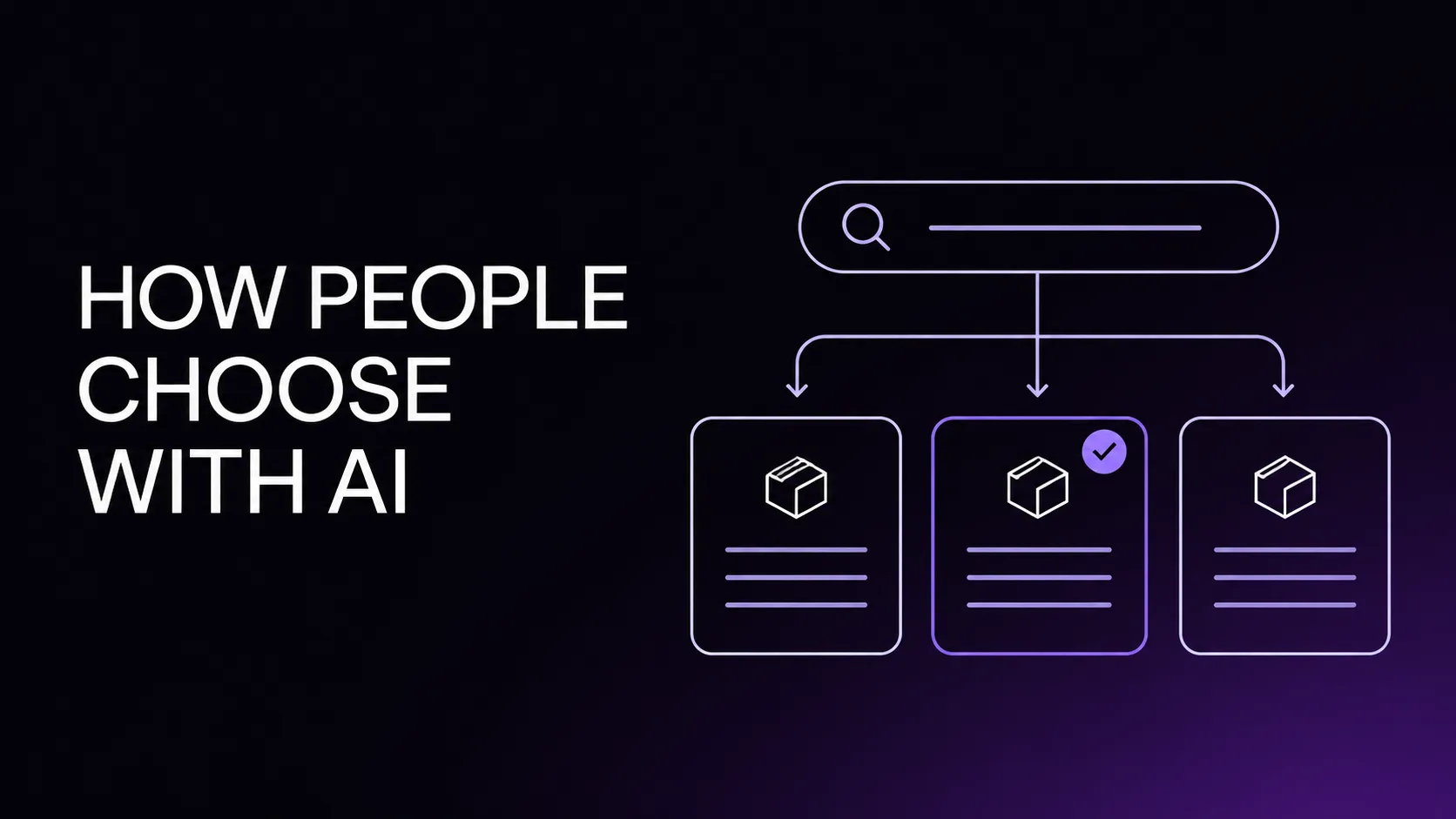
When buyers research a product in ChatGPT, Gemini, Perplexity or another AI assistant, they often want more than a definition. They want to know which option to choose, whether a product fits their situation and how it compares with the alternatives.
An analysis shared by Growth Unhinged, based on a Profound dataset of 12,511 commercial queries, highlights this shift. Recommendation-oriented prompts represent a meaningful share of product research. For brands, e-commerce businesses and B2B companies, LLM visibility therefore depends on being understood, compared and trusted—not simply matching a keyword.
What buyers ask AI assistants
| Question framing | Share | Underlying intent |
|---|---|---|
| “Can X do Y?” | 11.5% | Capability or compatibility check |
| “Recommend X” | 6.9% | Direct recommendation |
| “Best X” | 6.9% | Selecting the strongest option |
| “How do I do X?” | 6.3% | Solving a practical problem |
| “X vs Y” | 3.7% | Comparing alternatives |
| “How much is X?” | 2.3% | Commercial evaluation |
| “What is X?” | 1.1% | Initial information |
| “Should I use X?” | 0.7% | Decision validation |
| “Alternatives to X” | 0.7% | Finding competitors or substitutes |
The “recommend”, “best” and “should I use” framings add up to 14.5%. This helps explain why a basic product description is no longer enough.
From information retrieval to assisted decision-making
In traditional search, users often assemble an answer by opening several results. In an LLM, they ask the system to compress that journey: define the criteria, compare options and suggest a choice. The assistant becomes an additional layer between the brand and the potential customer.
To be cited or recommended, a company should make at least five elements easy to verify:
- what the offer is and who it is designed for;
- which problems it solves and where its limits are;
- how it differs from the alternatives;
- which evidence supports its claims;
- how a buyer can purchase, enquire or evaluate it.
How to create content for “recommend” and “best” queries
1. Define the use case precisely
A product page should explain not only what the company sells, but when the solution is the right choice. Generic claims such as “innovative” or “high quality” provide little decision value. Requirements, scenarios, industries, company size and operating conditions are more useful.
2. Publish honest comparisons
“X vs Y”, “alternatives to X” and “best solution for…” pages reach buyers close to a decision. A credible comparison should not claim that one product always wins. It should explain criteria, differences, trade-offs and the profile each option suits.
3. Make pricing and procurement clearer
When a complete public price list is not appropriate, businesses can still provide investment ranges, price drivers and what is included. A total absence of commercial information makes evaluation harder for both buyers and AI systems.
4. Add verifiable evidence
Case studies, reviews, certifications, measurable results, real examples and clear company information strengthen trust. Consistency across the website, business profiles and independent sources also helps systems understand the entity.
5. Structure direct answers
Descriptive headings, concise paragraphs, tables, FAQs and contextualised data make content easier to read and extract. SEO, AEO and GEO are not about filling pages with artificial questions. They are about making useful information complete, clear and verifiable.
A practical content framework for products and services
For each priority offer, build a compact content cluster:
- core page: value proposition, audience, benefits, proof and conversion action;
- use cases: “Can X do Y?” and “How to use X for…”;
- comparisons: X vs Y, alternatives and selection criteria;
- commercial content: pricing, costs, ROI and investment factors;
- decision FAQs: compatibility, limits, timing, support and risk;
- evidence: case studies, results, reviews and methodology.
This architecture supports traditional SEO, AEO and GEO together. International companies should also adapt examples, terminology and proof to each market rather than translating a single generic page. See our approach to multilingual website development.
What to measure
There is no single perfect LLM visibility metric yet. A useful monitoring system can include:
- brand citations and mentions for relevant prompts;
- presence in comparison and recommendation answers;
- accuracy of the information returned;
- referral traffic from AI assistants;
- assisted conversions and enquiries that mention ChatGPT or another tool;
- growth in branded and high-intent searches.
The priority for international companies
The question is no longer only “Which keyword should we rank for?” It is also “Which buying decisions should include our brand?”. Companies that explain use cases, differences, evidence and commercial conditions give AI assistants more useful material for a grounded recommendation.
Trep DigitalX helps companies across Europe, the United Kingdom and the United States build content, structured information and digital architectures for both Google and AI search. Request an analysis of your website and LLM visibility.
Frequently asked questions
Does ranking first on Google mean ChatGPT will recommend the brand?
No. Organic visibility can help, but LLMs also depend on entity clarity, topical coverage, evidence, sources and consistency.
Do companies need pages written only for LLMs?
Not necessarily. They need pages that are useful to people and structured so search engines and AI systems can understand and verify the information.
How long does AI-search optimisation take?
It depends on domain authority, competition, source quality and content coverage. Progress should be monitored over time with a defined set of prompts and markets.
Data source cited: Growth Unhinged / Profound Prompt Volumes dataset, 12,511 commercial queries, as shown in the material supplied.
Articoli in evidenza
Parliamone
Vuoi applicarlo alla tua azienda?
Raccontaci mercato e obiettivi. Guardiamo insieme il tuo sito e ti diciamo da dove conviene partire.